 528 Craftings
Image selection guide
Which images are ideal for a tufted rug, and which ones to avoid, so your finished piece is both beautiful and true to what you pictured. Happy tufting!
Good for tufting
- Simple colors. A limited palette with a clear break between each color.
- Clear outlines. Bold, well-defined lines keep the design crisp.
- Simple shapes. Circles, hearts, stars and basic geometric patterns.
- Flat cartoon style. Flat, 2D designs with no shading or depth.
Hard to tuft
- Shadows and gradients. Yarn comes in solid colors, so soft shading turns muddy.
- Words and thin lines. Text and fine lines lose their definition once tufted.
- Sharp angles and fine detail. Intricate details are hard to tuft cleanly.
- Photorealism. Realistic photos, especially faces and complex shading, don’t translate well.
Examples
What kind of image works best for a tufted rug?
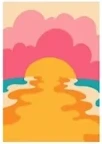
Simple images work best, especially for your first rug. Look for bold shapes, and keep outlines, thin lines, small details and lettering to a minimum. Keep the outer edge simple too: a square or rectangle background is ideal. Unusual outlines can add hours to finishing your rug.
Works 
Avoid
Can my design have a gradient?
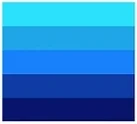
Not a smooth one. Yarn comes in solid colors, so break the gradient into a few flat bands of color.
Works 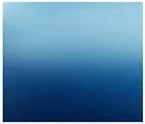
Avoid
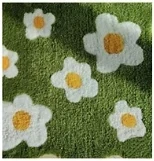
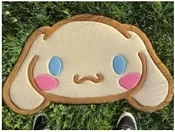
Can I use a photo of a toy, or of a rug I already have?
We need a flat 2D image. For a rug, use a straight-on photo taken from directly above. For a toy or character, find a flat drawing of it instead: photos of objects have angles and shadows that don’t carry over.
Works 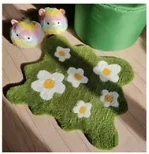
Avoid 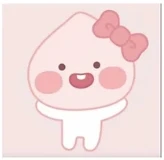
Works 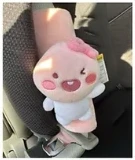
Avoid
My image has lots of characters in it. Can I use it?
Crop it down to one character. Repeating patterns and crowded scenes have too much going on for one rug.
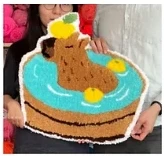
Works 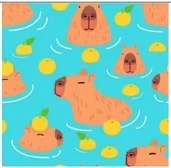
Avoid
Can I make a rug of my pet?
Yes. Turn the photo into an illustration first by posterizing it down to 2–3 color values. This free posterize tool (opens in a new tab) works well, and AI image tools can help too.
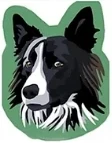
Works 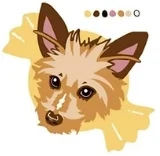
Works 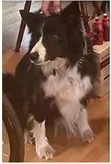
Avoid 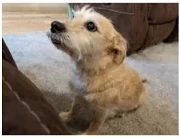
Avoid
What about small dots or details floating on their own?
Small dots, lines or details that stand apart need to connect to a background or a border.
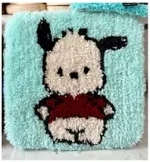
Works 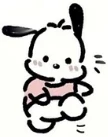
Avoid
Can my rug have an irregular or hollow shape?
One main object with a clean outline works. Crop to it and leave out the extras. The rug also can’t have open gaps, like the spaces between leaves, so fill them in or add a border around the design.
Works 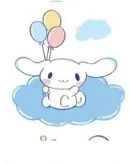
Avoid 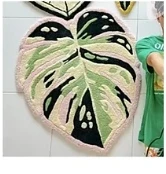
Works 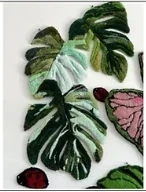
Avoid